Cardiac apprehension rarely announces itself. You are chatting at a barbecue in Merewether or waiting for a latte on Darby Road, and somebody near you drops without advising. Because minute, spectators make a decision end results. High‑quality CPR doubles and even triples the opportunity of survival in the very first few minutes before a defibrillator or paramedics get here. Yet even well‑intentioned helpers come under predictable challenges that blunt the influence of their efforts.
After years of teaching Newcastle emergency treatment courses and responding to genuine cases from the foreshore to the residential areas, a pattern is hard to neglect. The same handful of errors appear time and again, whether it is a first timer on a cpr training course Newcastle residents took through a neighborhood team, or an experienced personnel overdue for a mouth-to-mouth resuscitation refresher course Newcastle employers need. The bright side is that each blunder has a simple fix you can practice up until it becomes muscle memory.
This is a useful guide based in what often tends to go wrong on the pavement, not in clean class circumstances. If you train with First Aid Pro Newcastle or any type of trusted supplier offering first aid and cpr programs Newcastle broad, you will cover these factors comprehensive. Use this as a reality check and a refresher course, especially if your first aid certificate Newcastle budget card is collecting dust.
The solitary biggest error: hesitation
Most bystanders wait. They check for a pulse much longer than they should, or float because they do not intend to "do it incorrect." I have watched people take virtually a complete minute to move from "Is he all right?" to a first compression. In heart attack, every 10 to 15 secs lost matters. The mind starts to experience damage after roughly 4 mins without oxygen, and survival drops by concerning 7 to 10 percent for every single minute without CPR and defibrillation.
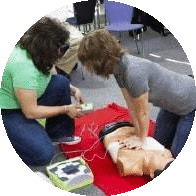
Hesitation is easy to understand. People fret about obligation, harming the individual, or catching an illness. In Australia, good Samaritan securities are strong when you act in great confidence. Compressions that split a rib are not "damage," they are a by‑product of reliable CPR on a grown-up upper body. Transmittable threat from hands‑only mouth-to-mouth resuscitation is very reduced, specifically if you use a barrier guard from a basic emergency treatment kit. The repair is psychological: choose now that you will certainly act. If the person is unresponsive and not breathing usually, begin compressions and direct someone to call Three-way Absolutely no. That is the limit that matters.
What "not breathing generally" actually looks like
People misread breathing all the time. Gasping, snoring noises, or uneven "fish out of water" breaths in the very first minutes after collapse are agonal respirations. They are a sign of heart attack, not typical breathing or healing. A person that is taking a breath efficiently will have regular chest increase you can see and really feel, normally in a calm rhythm. If you have to question it, treat it as not typical. Begin compressions, and switch to rescue breaths only if you are trained, eager, and have an obstacle gadget. If you are not, hands‑only CPR is better than waiting.
I as soon as saw an onlooker in Civic Park hold a phone flashlight to a male's mouth, checking for haze on a wintertime evening. The delay cost virtually a minute. Better approach: shake the shoulders, yell, open the respiratory tract with a head tilt chin lift, take no greater than 10 seconds to examine if the breast increases in a regular pattern. If not regular, get on the chest.
Depth and price drift under pressure
Even people that passed a first aid training course in Newcastle recently often tend to go shallow and slow-moving when the adrenaline hits. The target for adults is a deepness of concerning one third of the chest, approximately 5 to 6 centimeters, at 100 to 120 compressions per min. That rate feels a little bit much faster than a comfy stroll and a touch slower than a sprint. Some fitness instructors make use of tracks, but in reality, anchoring to a metronome like 110 beats per minute on your phone or an AED can help. When mentor cpr training Newcastle teams, we urge students to experiment a beat so they adjust their hands and eyes to a regular rhythm.
Depth matters greater than excellence. If you are counting in your head, go for 2 compressions per 2nd and examine yourself periodically. If the breast is not recoiling totally, you are leaning. Lift your hands somewhat at the top of each compression so the upper body bounce back. Complete recoil is not optional. It lets the heart fill in between compressions, and that directly influences the blood flow you generate.
The upper body is a pump, not the arms alone
A traditional sign of tiredness is the "elbow joint bend," where rescuers start using arm muscles as opposed to body weight. The form breaks down and depth endures. Place the heel of your hand on the center of the breast, place your various other hand on top, secure your elbows straight, and stack your shoulders over your hands. Then allow gravity job. Your back and hips should move with the compression. If your shoulders are behind your hands, you are combating physics.
If you are shorter, kneel closer to the person's side and lean in. If you are taller, move your knees back a touch so your shoulders are directly over your hands. I have seen both blunders at Newcastle first aid training sessions. As soon as corrected, trainees unexpectedly struck depth without additional effort and keep top quality for longer.
Breaking rhythm with unneeded interruptions
CPR resembles a manual life assistance equipment. Every quit drains pipes the pressure you constructed. Stopping to adjust the individual's head, to neat apparel, or to chat concerning signs takes place frequently in actual events. Keep disruptions under 10 seconds. Strategy actions to match all-natural breaks. If you are providing rescue breaths, deliver two quick breaths and come back on the breast. If an AED gets here, have someone continue compressions while an additional reveals the chest and applies pads. The maker will instruct you to stop briefly throughout analysis. Or else, maintain compressing.
I bear in mind a retail group on Seeker Road doing whatever right till the AED arrived. Then three individuals hovered, questioning the pad positioning representation while compressions stopped. The solution is wedding rehearsal. Throughout first aid training courses in Newcastle, exercise an AED handover as a choreographed move: someone calls "pads on," an additional maintains compressing while pads are applied, and only quits when the AED clearly requests for it.
Hands only mouth-to-mouth resuscitation versus breaths: pick decisively
Some rescuers hover between methods and do neither well. For adults who unexpectedly collapse, hands‑only CPR is perfectly appropriate if you are untrained or resistant to provide rescue breaths. It lowers doubt and maintains perfusion. For sinking, overdose, or pediatric situations, rescue breaths include worth since these are often respiratory apprehensions. If you have actually taken a first aid and mouth-to-mouth resuscitation program Newcastle service providers provide, you will have practiced the 30 compressions to 2 breaths cycle with correct head tilt, chin lift, and a good seal.
What matters is decisiveness. If you are providing breaths, do them correctly: open up the air passage, squeeze the nose, develop a limited seal, deliver simply enough air to see the chest increase, then resume compressions instantly. Over‑ventilating reasons problems by raising intrathoracic stress and minimizing blood go back to the heart. Quiet, controlled puffs defeat forceful blasts.
Fear of triggering harm
Concern regarding broken ribs turns up in almost every Newcastle emergency treatment training course. In adults, fractures occur in a significant portion of actual resuscitations. It is undesirable, yet it does not suggest you are doing it incorrect. The rule of thumb is that incorrect is superficial, slow, or postponed. If you really feel a fracture, do not stop. Reposition your hands to the center of the breast and maintain going.
Another worry is legal exposure. In New South Wales, good Samaritan provisions shield those that assist in an emergency situation. If you are acting in great confidence, within your degree of training, and not recklessly, you are secured. Throughout emergency treatment training in Newcastle, we emphasise recording the occasion afterward, but in the moment your concern is care.

The AED myth: "We do not require compressions if the device is coming"
Automated external defibrillators do one point effectively: they deal with shockable rhythms by providing a controlled electrical shock. They do not distribute blood. From the moment a person breaks down, oxygen and nutrients are not reaching the mind unless you press the upper body. Anticipate an AED to show up in 2 to 5 mins if you remain in a well‑equipped place, longer outdoors or at home. Those minutes are your own to fill.
In cpr training courses Newcastle individuals typically assume the AED pads should be positioned on a completely dry, bare upper body. In heavy moisten the Newcastle foreshore or after a swim, clean the upper body rapidly, shave or press strongly through modest hair, and apply pads. If a medication spot is in the pad area, eliminate it and wipe. Piercings are great, simply stay clear of positioning a pad directly over steel. Pacemaker protrudes generally rest under the collarbone; location the pad somewhat away from that area. None of these adjustments warrant lengthy pauses.
Mishandling youngsters and babies by scaling grown-up technique
Children are not tiny grownups when it concerns CPR, though the core principles hold. The most common errors are pushing too deep or as well fast on infants, or preventing compressions because the rescuer hesitates of causing injury. Use 2 fingers for babies in the facility of the breast, about 4 centimeters deep, and 2 hands or one hand for kids as size dictates, at a deepness of one third of the breast. Give breaths if you can, due to the fact that pediatric arrests usually begin as breathing problems.
If you are alone with a less competent kid or baby and no phone, carry out 2 mins of mouth-to-mouth resuscitation first, after that go call Triple No and get an AED. That sequence raises the odds due to the fact that children reply to air flow early. This nuance is one factor households benefit from a first aid and cpr training course Newcastle moms and dads can exercise in, not simply read about online.
Teamwork mistakes: too many chefs, or otherwise enough
On busy websites, multiple helpers can wreak havoc. I have seen three good friends compress at the same time from various angles, a well‑meaning scrum that produced no deepness. I have actually likewise seen a single rescuer work for 8 mins without changing, with rate and deepness decaying by the minute.
A simple structure functions finest. A single person leads and talks in clear, short commands. One compresses. One handles the phone and AED. Others regulate the scene and direct web traffic or fetch things. Switch compressors every 2 minutes or at each AED analysis to lower tiredness. This tempo stops the progressive disintegration in top quality that sneaks in around the 90‑second mark. If no person else is readily available, utilize a speed you can sustain, and prioritise constant deepness and complete recoil over showy speed.
Environmental facts specific to Newcastle
Context forms resuscitation. Around coastlines, drowning cases require very early rescue breaths. If the person is just drawn from the water at Nobbys, do a quick roll to drain evident water from the mouth, open up the air passage, and supply five preliminary breaths prior to clearing up right into cycles of 30 compressions and 2 breaths. Anticipate regurgitation. Tilt the head correctly, offer sluggish breaths, and be ready to roll the individual as required to remove the respiratory tract without lengthy pauses.

In heat waves, bystanders exhaustion much faster. Move the person onto a company surface, preferably in color. On soft sand or a cushioned surface area, compressions shed efficiency; slide a board, lid, or stiff item under the back. In jampacked events, appoint a spotter to flag down the getting here paramedics. Several Newcastle first aid training sessions currently incorporate group administration for precisely this reason.
High surge apartments and stairwells present their very own difficulty: hard touchdowns are uncommon, and relocating the individual to a far better surface area expenses time. If the flooring is carpeted, press with added concentrate on deepness, and do not waste a minute moving unless the surface area is undoubtedly too soft to depress the sternum effectively. As soon as paramedics get here with a mobile board, transfer ends up being faster.
When not to begin, and when to stop
People additionally struggle with the borders. If the scene is dangerous-- real-time cables, website traffic, fire-- do not get in. If there are apparent indications of irreversible fatality such as decapitation or disintegration, CPR is not proper. In nearly every little thing else, start.
Stopping is a judgment phone call. Proceed up until the person shows indicators of life, an AED advises or else, qualified help takes control of, or you are physically unable to continue. On a long‑response country work west of the city, 2 ranch employees rotated compressions for greater than 20 mins before the initial ambulance brought up. That stamina originated from practice. A half‑yearly mouth-to-mouth resuscitation refresher course Newcastle staffs full on site makes that type of endurance feasible due to the fact that it rehearses sensible durations, not just book sets.
Rescue breaths without an air passage is hopeful thinking
When breaths stop working to lift the chest, a lot of rescuers try to blow harder. The airway is the issue generally. Reposition. Turn the head more. If injury is presumed, make use of a jaw drive. Clear the mouth quickly if you see vomit or an obstruction. Use just sufficient air to make the upper body increase. If you do not have an obstacle and hesitate to supply breaths, change totally to hands‑only. Partial, inefficient breaths waste time and increase danger https://zenwriting.net/amarismdpp/emergency-treatment-training-newcastle-accredited-practical-trusted without benefit.
Proper ventilation is a skill that just sticks to practice. Newcastle first aid courses that spend time on mask methods and the equilibrium in between speed and volume create calmer rescuers at actual scenes. If your last program skated via breathing in 5 mins, consider scheduling a more hands‑on emergency treatment and mouth-to-mouth resuscitation course Newcastle carriers keep up circumstance time constructed in.
Overlooking relatively easy to fix causes
While compressions proceed, think about the common relatively easy to fix reasons for heart attack: the Hs and Ts. You do not need to recite all of them, but do watch out for hints. Did the person choke on food at a dining establishment? Is there an inhaler on the ground? Exist indicators of an overdose? If an AED gets on the method, compressions come first, but a fast glimpse that triggers the best item of info to paramedics can shape treatment. That type of situational understanding is drilled in much better Newcastle emergency treatment training programs, which make use of study from regional events as opposed to generic scripts.
Post resuscitation missteps
If somebody gains back awareness, the work is not over. Do not sit them up abruptly. Keep them on their side in a recuperation position, display breathing, and prepare to return newcastle first aid course to compressions. People might be perplexed, combative, or nauseated. Keep tranquility, deal confidence, and mention what occurred in easy terms. If an AED delivered a shock, leave the pads in place. Paramedics will want to see the rhythm history the tool caught. Stay clear of offering food or beverage, also if they ask, and keep the setting quiet. It is appealing for the team to crowd in for a debrief; secure the individual's privacy.
Training that sticks beats certificates that fade
The distinction between theory and efficiency appears at 2 min marks. Quality slides, rhythm wanders, breathing ends up being chaotic. Good training builds the stamina and routine to eliminate those contours. If you live or work locally, choose newcastle first aid training courses that are scenario‑heavy, make use of comments manikins that measure deepness and recoil, and include AED handovers at sensible speeds.
You want courses where instructors correct your type repetitively, not just tick boxes. Ask whether the carrier supplies brief compressions‑only refresher courses in between full accreditations. Several work environments in the region schedule a short cpr training Newcastle team session every 6 months, even if the full emergency treatment certificate cycle is much longer. That cadence keeps abilities alive.
First Aid Pro Newcastle, among other carriers, runs mixed learning choices for people with tight timetables. The functional sessions matter many. An online quiz will not instruct your joints to secure or your shoulders to stack. Those come from a fitness instructor pressing your hands, similarly an instructor readjusts pose. If your workplace is sending out a team, request scenarios matched to your environment: poolside if you are at a swim school, shopfront if you are retail, workshop if you are commercial. The realism helps.
A quick calibration tool you can carry
Below is a compact area checklist you can practice. It is not a replacement for newcastle first aid training, however it tightens your response under stress.
- Check response and breathing in under 10 secs. If not regular, call Triple Absolutely no and begin compressions. Compress set in the facility of the upper body at 100 to 120 per min, one 3rd depth with complete recoil. Minimise pauses. Just stop for AED analysis or to deliver two fast rescue breaths if educated and willing. Swap compressors every two minutes when possible. Keep duties clear: one leads, one presses, one takes care of AED. Apply AED pads early. Continue compressions during preparation. Follow prompts, and resume right away after a shock.
Edge cases worth knowing
Pregnancy in the 2nd or 3rd trimester changes breast technicians and circulation. You still execute common compressions, yet if there are enough rescuers, have a person manually displace the uterus slightly to the left to soothe pressure on significant vessels. This is covered in sophisticated emergency treatment training courses in Newcastle, however discuss it below since a small tweak enhances outcomes.
Hypothermia complicates assessment. A cool individual may have a faint pulse and sluggish breathing. If you think significant hypothermia, handle carefully, and start mouth-to-mouth resuscitation if there is no clear breathing. The guiding expression is "No one is dead until warm and dead." In coastal Newcastle winters or after a long browse, that subtlety matters.
Opioid overdoses are a lot more usual than lots of become aware. If the person is less competent and not breathing usually, compressions come first. If naloxone is offered and you are educated, administer it while mouth-to-mouth resuscitation continues. Rescue breaths are particularly useful right here since hypoxia drives the arrest.
Electrical injuries can cause cardiac arrest even when the entry wound looks tiny. Guarantee the source of power is off before coming close to. When secure, treat as any cardiac arrest with very early AED use.
The human side of doing it right
A last observation from the area: individuals remember just how you speak with them. Clear, firm, and calm words secure the scene. "I have him. You call Three-way Zero and put me on speaker. You, bring the AED from the entrance hall and return. I am starting compressions currently." That tone offers the crowd jobs and decreases interference. When paramedics arrive, a crisp handover with times and actions helps: "Collapse at 10.18. No regular breathing. Mouth-to-mouth resuscitation started at 10.19. AED connected at 10.22. One shock provided at 10.23."
Newcastle is full of eager helpers. With a little technique, those assistants end up being effective rescuers. Whether you schedule a first aid program in Newcastle to renew essentials, enrol in a thorough emergency treatment and cpr course Newcastle offices favour, or pencil in a quick mouth-to-mouth resuscitation refresher course Newcastle instructors work on site, the goal coincides: decrease hesitation, fix technique drift, and construct a routine of action.
No one anticipates you to be excellent under pressure. They do anticipate you to start. If you bear in mind just 3 things from this guide, make them these: do not postpone for a pulse, press set with full recoil, and utilize the AED as soon as it gets here without stopping compressions other than when the gadget tells you to. If you can do that, you have actually currently stayed clear of the most typical blunders seen across countless real‑world cases.
And if it has actually been a while since your last class, today is a great day to book. Newcastle emergency treatment training is not just a certificate on a wall. It is the distinction between enjoying and assisting when it counts.
" width="560" height="315" style="border: none;" allowfullscreen>